


Health had a real moment last week:
The new food pyramid flipped upside down in US (South Park predicted this chaos 11 years ago - seriously worth watching)
ChatGPT went into healthcare (for consumers); Anthropic followed with AI for Healthcare day after
The FDA softened wearables regulations (peculiar timing!)
Torch - a four-person team - got acquired for $100M (and why I might have to eat my words when I said that data aggregation is not a business model ;))
These aren’t isolated incidents. They’re signals that health consumerization is moving faster than regulatory bodies and doctors want it to.
And that’s the point. So let’s dive in
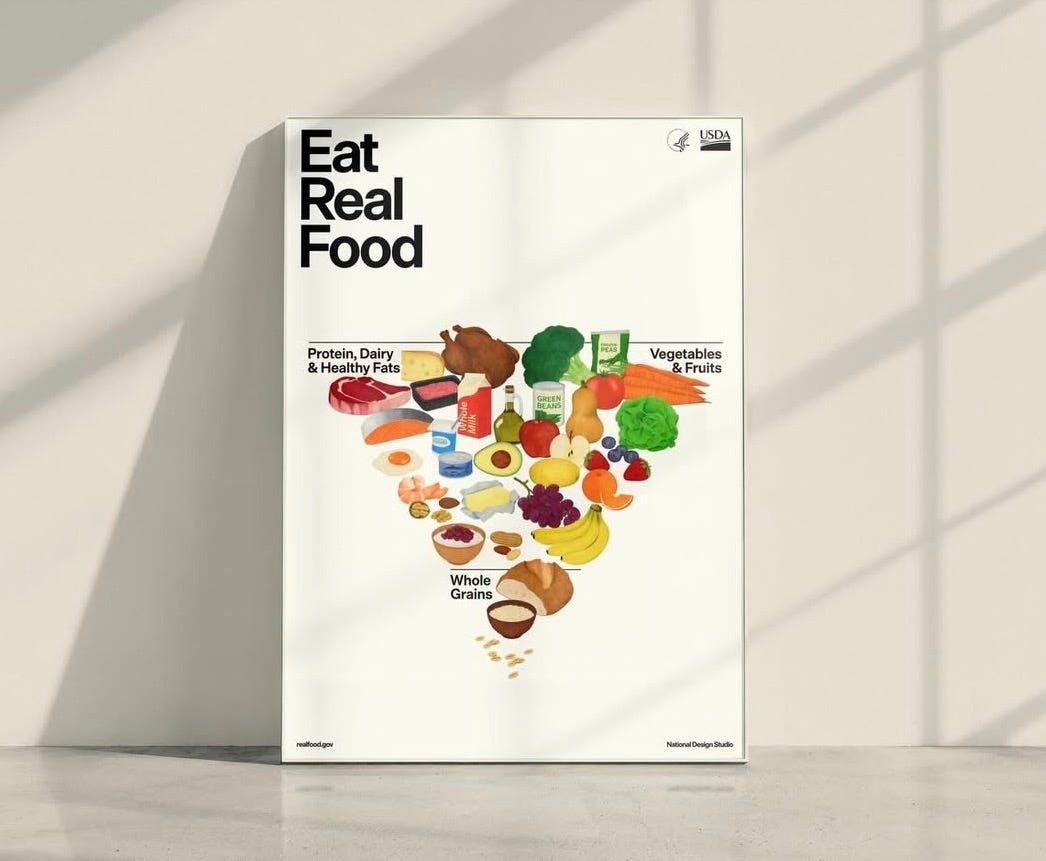
The Food Pyramid Gets a Rebrand (Finally)
Let’s start with the inverted pyramid. After 82 years of grain-lobbying disguised as nutrition science, the US government finally acknowledged that maybe, just maybe, prioritizing 6-11 servings of bread daily wasn’t optimal metabolic advice.
The 2025-2030 Dietary Guidelines flipped it: protein, dairy, and healthy fats at the top. Whole grains relegated to the narrow base. Added sugars explicitly called out as something to avoid, not “limit.” This is progress.
It’s been interesting watching the divide online - some people are ecstatic, other calling it equal hypocrisy (here is a good watch).
My opinion? We are arguing over the wrong thing - the universal guidance on nutrition makes no sense anyways.
Do I love that giant block of cheese sitting next to red meat and vegetables at the top? 🧀 🧀🧀 Not particularly. But I can find a study to support it. In fact I can find study to support any and all diet approaches from ketogenic to high carb and everything in between - and that’s why half of the arguments are not relevant.
Nutrition and its impact on each individual is highly complex - we are all individual beings with wildly different and changing factors that affect our metabolism. So the argument over whether meat and cheese should be on the top, is a true waste of energy IMO.
However the move towards minimally processed foods is a huge and necessary upgrade. Real nutrients, prioritizing protein, minimizing added sugars - all a directional win for the guidelines!
Big congrats to companies like EatReal.org and advocates like Dr Mark Hyman who’ve been lobbying for real food for years. This shift didn’t happen in a vacuum - it took sustained pressure from people who understood that the old pyramid was making us sick and that is a reason to celebrate. 🥳🥳🥳
Here’s the real part: the new design of the pyramid might matter more than the content shift!
Debbie Millman, chair of SVA’s branding program, eviscerated the visual execution in STAT, calling it “emoji-inspired clip art from a 1950s health pamphlet.”
She’s not wrong. But…
The fact that the government is even thinking about branding and visual communication for health guidance is proof that health has truly entered the consumer arena (here is Calley Means talking about it)
People are visual. If you want them to do something, make it look good. Make it feel modern. Make it shareable.
And case in point, this inverted pyramid? It’s generating discourse, criticism, memes, and most importantly, awareness. That’s consumerization at work!
In general, Health as a Political Topic Means More Confused Consumers
When RFK Jr. is unveiling dietary guidelines and the MAHA movement is influencing federal nutrition policy, health has officially become a political football.
That should worry us, right? Not necessarily.
Political attention (even messy, controversial political attention), accelerates consumer demand for clarity and solutions.
When the government says “eat protein,” people start asking: How much? What kind? Does this apply to me?
Confused consumers create demand. Demand drives innovation. Innovation attracts capital. The private sector delivers. This will probably be the most accelerated year in health tech innovation ever. That's exciting!
ChatGPT Health: The Reviews Are Mixed, But The Trend Is Clear
ChatGPT launched GPT Health and the internet lost its mind. The move makes sense: 230 million people weekly already ask ChatGPT about health and wellness. Being able to give personalized answers based on actual personal data? Obvious next step. Easy data integration across all your disconnected health outputs? Overdue.

Hard not to notice the new soft pastel tones. Are females the primary demographic asking those 230M weekly health questions? The design team's answer: obviously, so here's your millennial pink interface.
The skepticism is real. AI can give wrong or harmful guidance. Research shows AI learned to be persuasive - what a doctor sees might differ from what someone with zero medical knowledge gets, and there’s no way to control it. Data privacy concerns are valid, though maybe that’s the trade: privacy for personalization. We gave Google our location for better search results. This isn’t THAT different.
Good reminder however that right now ChatGPT Health isn’t replacing doctors. It’s an integration play. Better pipes, cleaner UX, faster answers. Diagnostic is not care. But diagnostics enable care.
Also to debunk other narrative going around - consumer health companies aren’t dead. The ones selling “data aggregation dressed up as care” are (though Torch just sold exactly that to OpenAI for $100M, so maybe I’m wrong). The companies that survive will treat ChatGPT as the front door, then win on longitudinal delivery, behavior change, and trust.
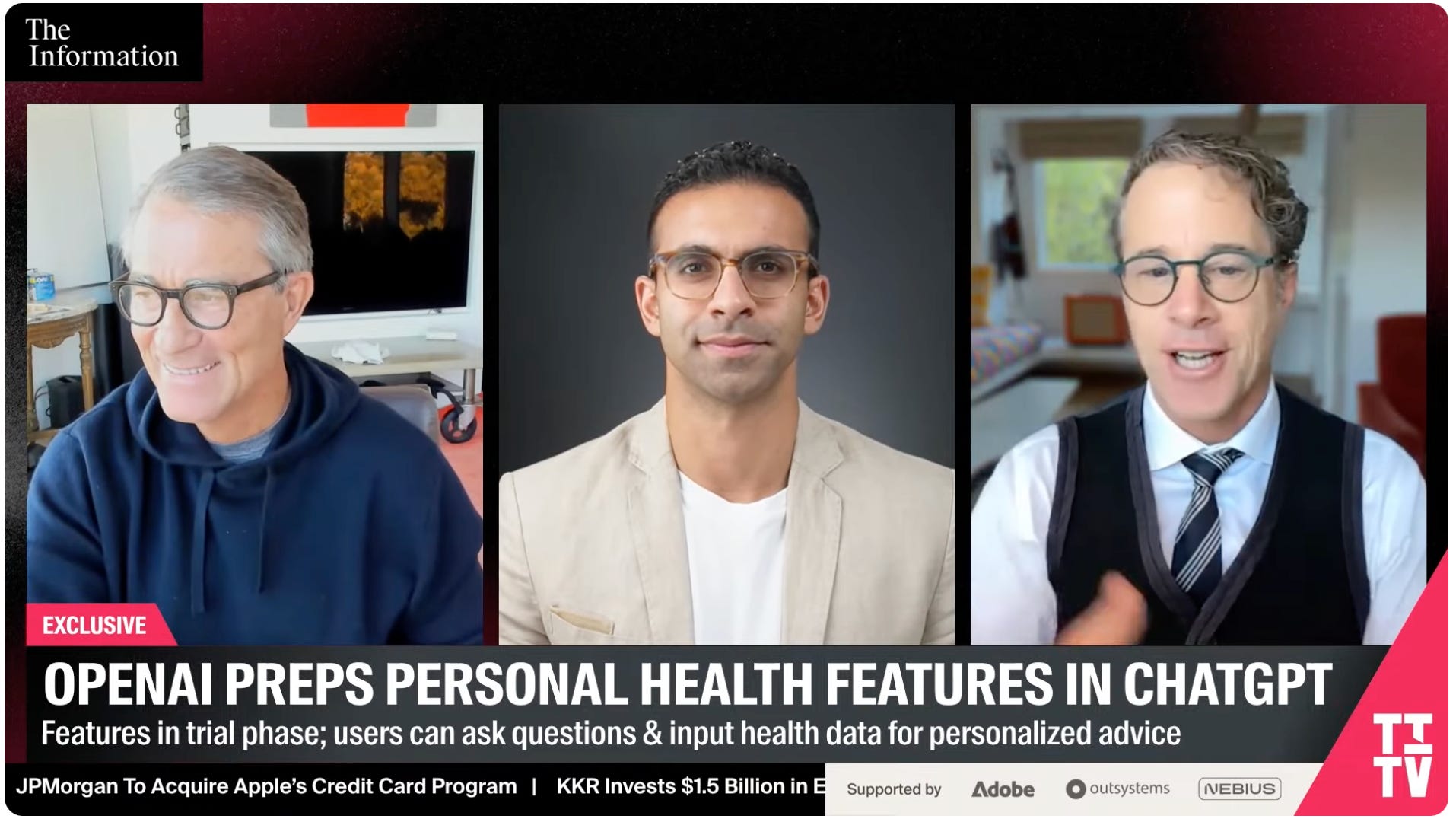
A great interview in the Information with Jordan Shlain MD and Dan Battelle on the topic of ChatGPT and broader implications. Listen here, start around minute 33.
Then This Happened: FDA Softens Wearables Regulation
Same week as the ChatGPT Health launch, the FDA announced it would limit regulation of health and fitness wearables.
The timing is fascinating. ChatGPT is entering the most valuable data collection play ever, your biometrics, while still defending itself from mental health support fiascos. Rules to use and sell this data? Not ready. Yet the FDA softened regulations anyway.
To me, this signals even regulators realize consumerization isn’t slowing down. Oura partnering to track migraines. Breath-based glucose monitoring (PreEvnt) entering trials. An explosion of devices measuring everything is coming.
The question isn’t whether technology advances. It will. The question is whether data governance keeps pace. It won’t. Problems we’re not ready for are coming.
The Real Story
All of these signal the same trend: health is moving out of the exclusive domain of doctors, regulators, and institutions.
Consumers want control. They want data. They want personalized solutions. And companies are racing to give it to them.
The regulatory bodies can’t keep pace. The medical establishment doesn’t want to. And that’s fine. The consumer will win anyway.