


I have been watching New York discover sauna.
Which is funny, because there is perhaps nothing less new.
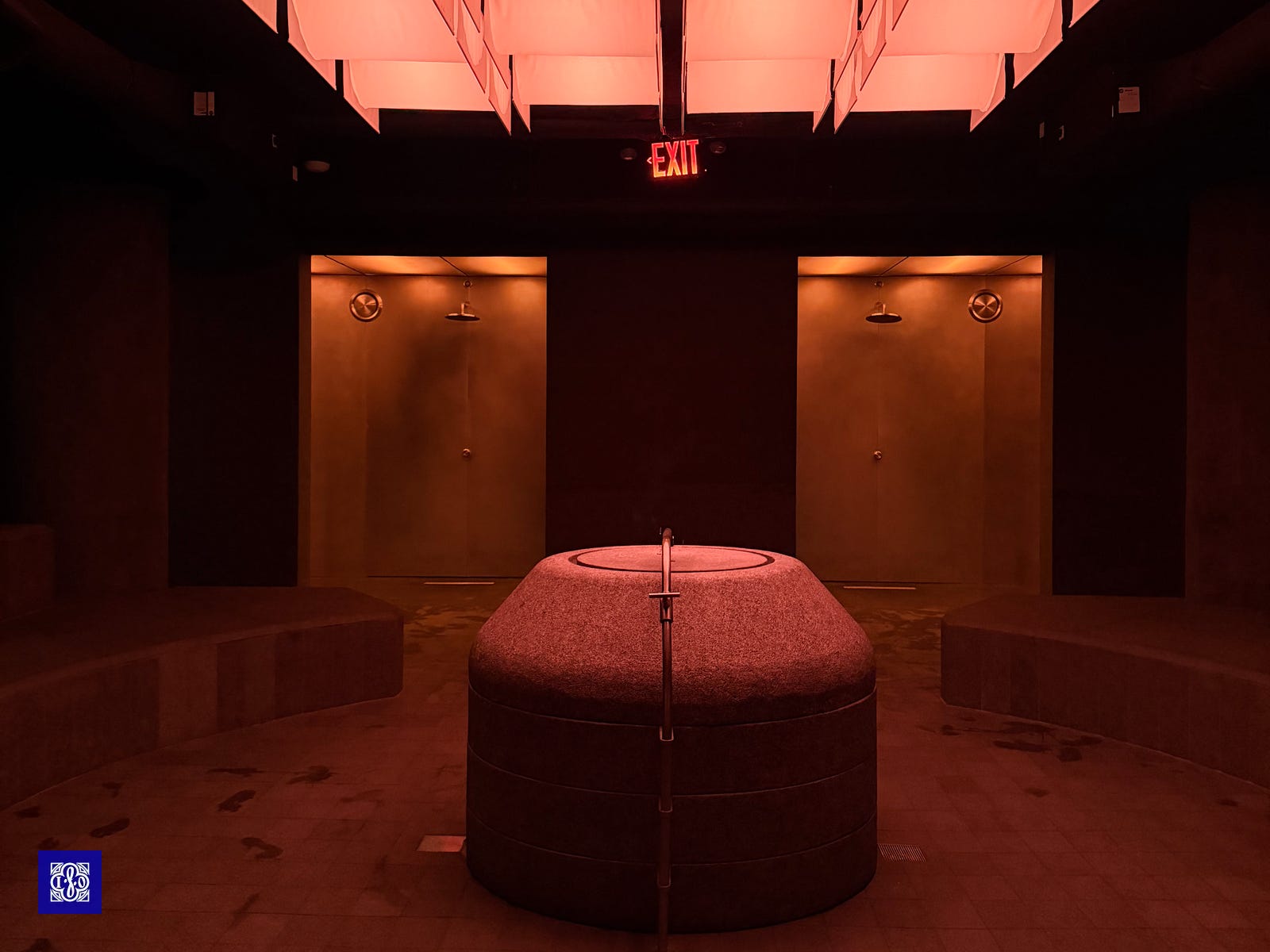
I grew up in Europe, where sauna never needed to be explained as a longevity protocol. You went because it felt good. Because it was cold outside. Because your parents went. Because there was one at the gym.
Now in New York, we have taken the hot room, added beautiful interiors, cold plunges, breathwork, guides, playlists, memberships and, naturally, a booking app.
And I am very much here for it.
There is Othership, which essentially turned sauna into a guided group experience. Lore Bathing Club opened practically next to my apartment. Then there is SAINT, SCHWET and The Altar, the place under review here.
Some are social, some deliberately antisocial, some guided, some places where you disappear into a very hot room and don’t speak to anyone.
What I find interesting is that we aren’t really inventing a new wellness category. We are productizing a very old one.
And unlike a fair amount of what gets productized in longevity, sauna has a meaningful body of research behind it.
One of the best-known studies followed more than 2,300 Finnish men and found that more frequent sauna use was associated with lower cardiovascular and all-cause mortality over long-term follow-up. It was observational, so it cannot tell us that sauna itself caused the difference, but the association was notable. Original study.
This is increasingly my favorite category of longevity intervention: old enough that humans didn’t invent it for Instagram. Interesting enough scientifically to keep studying. Pleasant enough that I don’t particularly need a biomarker to convince me to do it.
Cold exposure deserves a little more restraint. The evidence for sweeping long-term health claims is much less mature than the enthusiasm around it. A recent systematic review describes a limited and varied body of research. Cold-water immersion systematic review and meta-analysis.
All of which brings me to my personal favorite of New York’s new crop: The Altar.
The Altar and I actually go back to before The Altar existed. When Sheba Jafari left her finance jobs to start the company, she and Henrique de Castro came to meet Harvey Spevak and me at Equinox. I’ve stayed somewhat close to the team since and became a founding member.
So yes, I am rooting for them. But there are three specific reasons The Altar has become my personal favorite.
First, the design changes how I feel - and apparently how I behave.
This is something I learned at Equinox. The best physical spaces don’t make you consciously admire the design all day. You just feel comfortable before you’ve figured out why. You stay longer. You move through the space differently.
The Altar has that quality. The symmetry, the lighting, the circular layout. Pictures show you what it looks like, but they don’t quite explain how it feels to be there.
And the most unexpected effect, for me, is social.
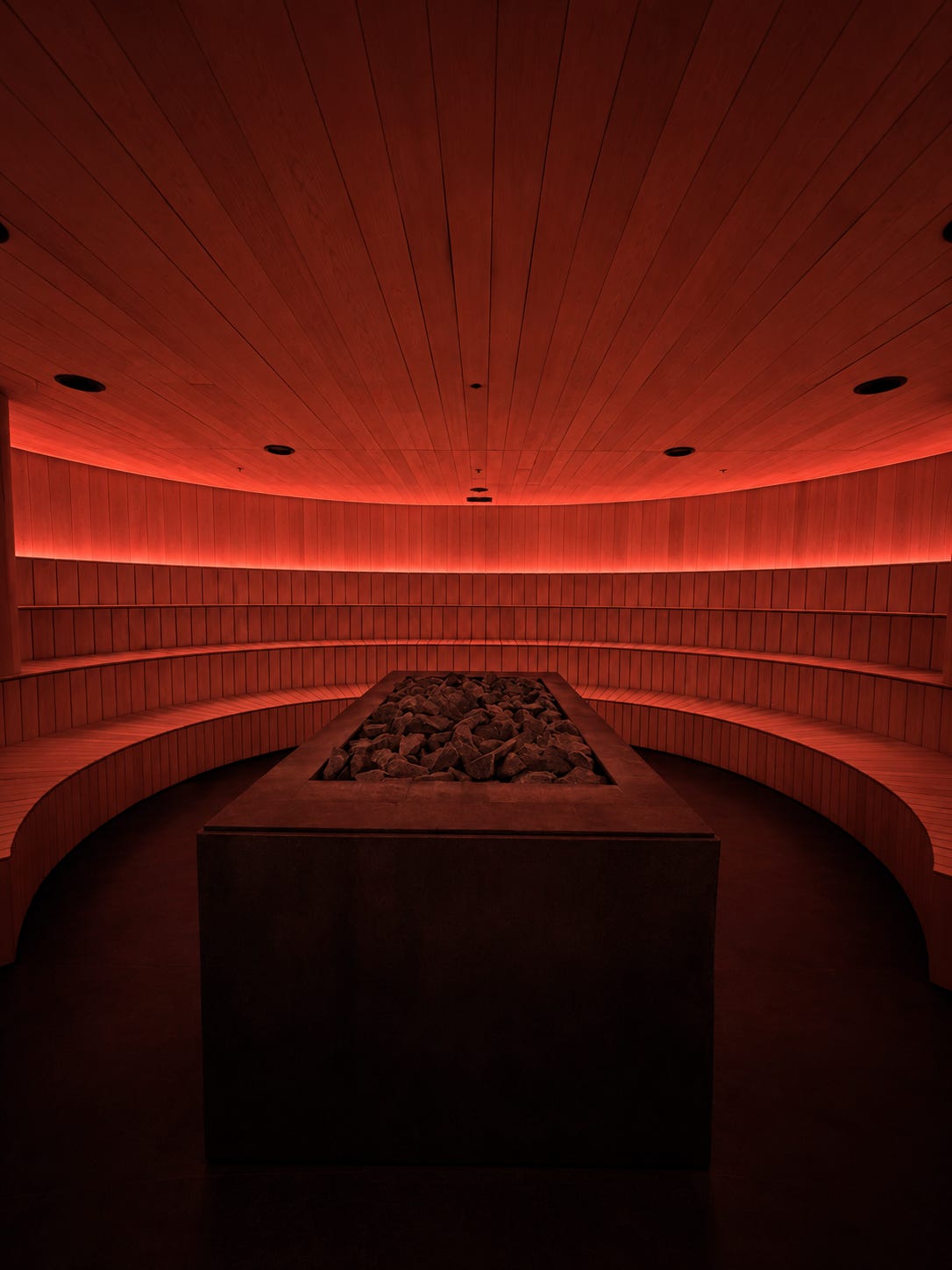
I am not someone who particularly wants to make friends while exercising. My ideal wellness environment has historically been: people around me, absolutely; people requiring conversation from me, less so.
And yet I talk to people there.
Somewhere along the way, wellness became extraordinarily solitary. Your Oura score is yours. Your supplements arrive at your house. Your trainer trains you. Your meditation happens in headphones.
Here, I find myself enjoying something with other people without having arrived with the explicit intention of “finding community.” I think the design deserves some credit for that.
Second, they understand hospitality.
You can describe The Altar as a list of services: sauna, cold plunge, red light, compression, infrared. But that doesn’t explain why I would choose to spend my time there.
How you’re greeted, the music, the pacing, the attention to the experience—all of that matters. It’s the difference between going somewhere to complete your wellness routine and going somewhere because you actually enjoy being there.
There is a version of the future of wellness where every service comes to us and friction approaches zero. Then there is another version where the physical place becomes valuable precisely because we need somewhere worth leaving the house for.
I suspect both win. The Altar gives me a reason to leave the house.
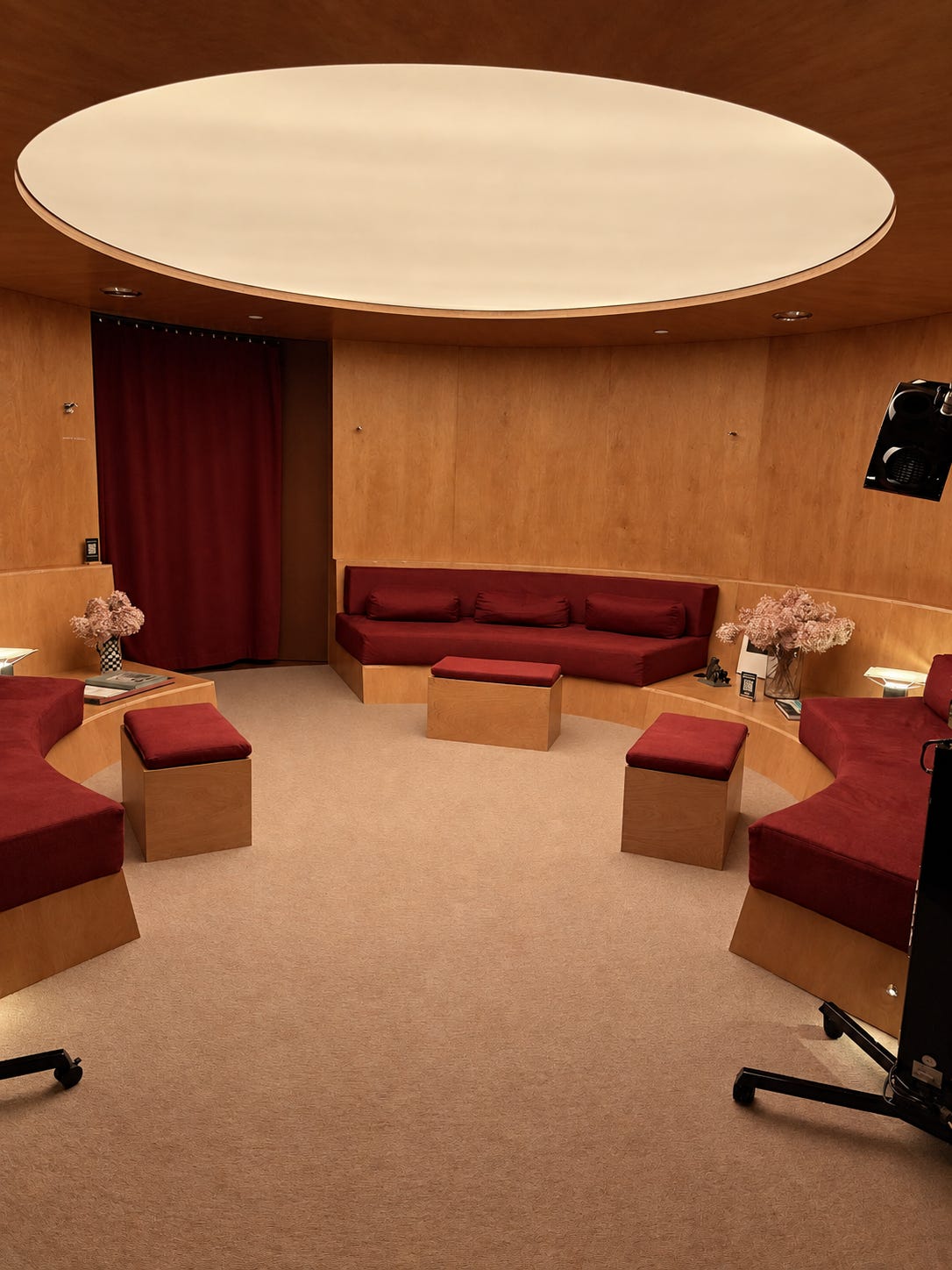
Third - and this is the part I’m most interested in - they’ve connected the wellness experience to healthcare.
This is the first sauna I’ve personally been to where I can also access a physician-led program with biomarker testing, genetic testing and ongoing medical support.
I’ve been fascinated by this convergence since we launched the $40,000 Optimize program at Equinox.
We engage with our health constantly: at the gym, at dinner, in bed, with the trainer we see three times a week, on the wearable we check every morning. Yet our medical care often happens separately from all of it.
The Altar brings those activities closer together. You can come because you want to sit in a sauna and, through the same business, have access to a doctor who reviews your data and how you’re feeling.
That doesn’t mean everything offered has equally strong science behind it. Sauna and BPC-157 don’t belong in the same evidentiary bucket, and physician oversight establishes a much needed framework.
The model itself is what interests me the most: having medical support connected to somewhere you already spend time looking after yourself.
The front door to healthcare may eventually look considerably less like a doctor’s office, and considerably more like somewhere you already wanted to be.
Those are my three reasons. I asked Sheba about the decisions behind them.
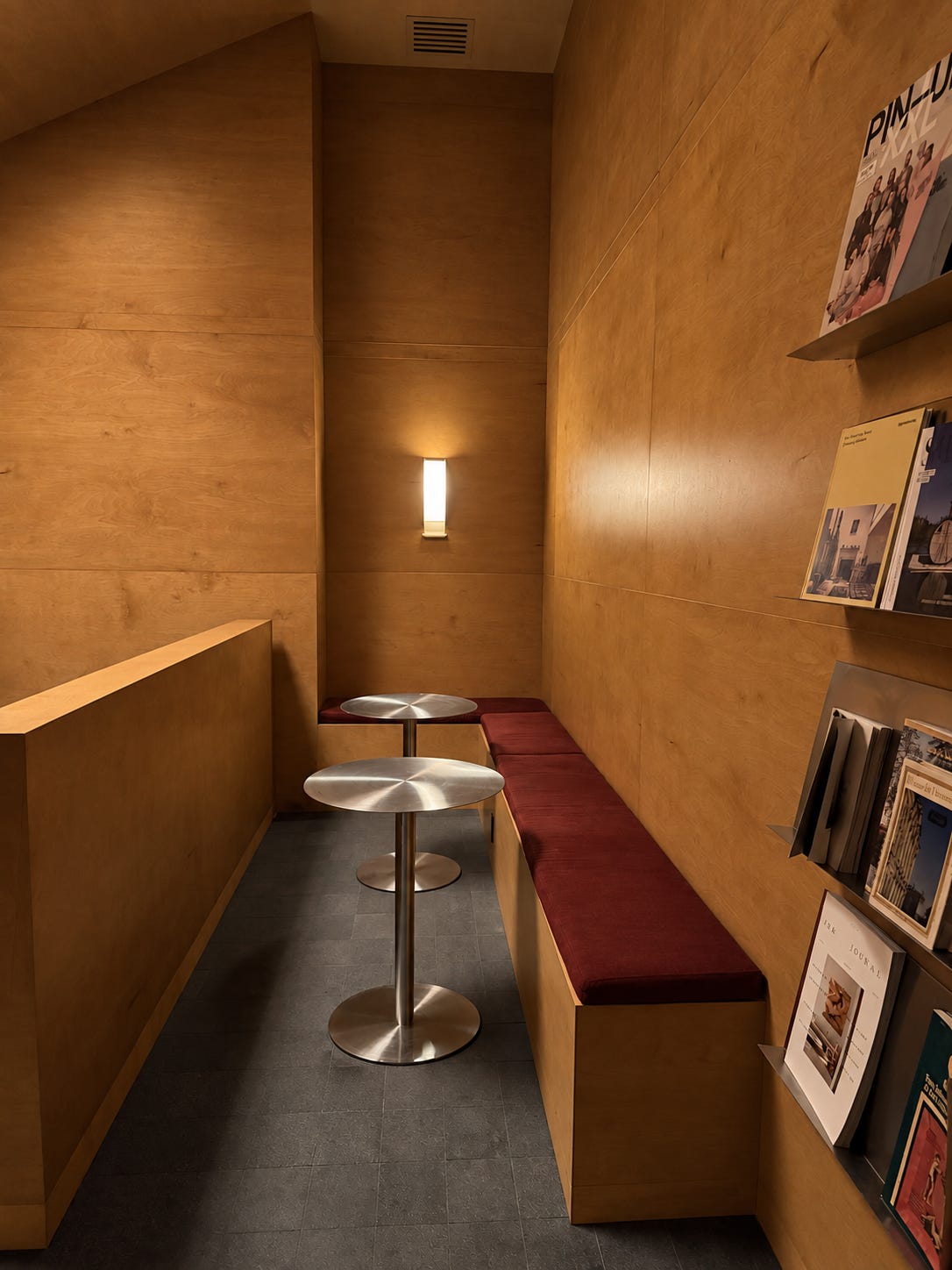
Julia: I find myself talking to people here, which is unusual for me. How much of that is the design?
Sheba: Very intentional. Without a place to congregate, people don’t necessarily connect. We kept bringing circles into the space so people would naturally gather and talk. Health is made up of small choices you make every day. Our thinking is that doing those things with other people makes them more enjoyable and easier to keep doing.
And you interviewed 45 architects?
We did. We ended up choosing a two-person team, Marsollier Villacorta. It’s a New York City and Mexico City based practice founded by Cyril Marsollier and Wallo Villacorta. Stuart, our co-founder and creative director, oversaw the details. There’s a lot of symmetry and a grid underneath the design. Then there’s everything around it: how the guides are trained, the music, the scent, how you’re greeted. The hospitality is part of what we’re building.
Who’s coming? Is it the longevity crowd?
We have the performance-oriented people, but a lot of our community is actually creatives - people in production, film, art and acting. We think of ourselves more like Equinox SoHo than the gym downstairs from your apartment. People come because they want this particular experience.
Do you have to be a member?
No. Anyone can come. Membership is about getting better value if you’re here regularly. We have a $165 membership for four visits a month, and a $350 membership with $500 in credit for people using both the sauna and cold plunge and the Practice. We don’t want people to think they need to join a private club to walk through the door.
What does the longevity membership add?
That’s $850 a month. It includes testing for more than 100 biomarkers, genetic testing, hormone labs twice a year and quarterly virtual appointments through Concierge MD. There’s also access to ask health questions between appointments, recovery services in the space and a monthly peptide or IV offering.
What happens in that first medical appointment?
The doctor starts with a conversation about how you feel. Then you do the labs, and there’s another appointment to go through them. It’s about looking at both: what the numbers say and what you’re actually experiencing. The appointments are virtual, so it’s easy to fit them into your life.
Did you worry that adding clinical services would change the atmosphere?
We did talk about that. But people want to take a more active role in their health. We chose to make the experience communal. You might be getting an IV while someone next to you is doing red light or wearing compression boots. You can talk to each other and ask the nurse questions.
That last detail has stayed with me. Even the parts of the experience you might expect to happen behind a closed door have been designed around being with other people.
I came for a practice I’ve known most of my life. I’m interested in what happens around it: who you meet, what becomes a habit, and whether a place you enjoy visiting can help you take a more consistent interest in your health.
So if you took anything from this post - go check out The Altar!
If you enjoyed this, send it to the friend you’d take to the sauna - and subscribe for more on the science, businesses and people shaping how we live longer and better.
Follow me for more of what I’m trying, questioning and discovering along the way. See you next week.