



Last weekend: Lake Garda. Hotel Fasano. Possibly some of the best October “work remotely” views on earth.
Two studies dropped this week that made me feel simultaneously optimistic about the future and deeply concerned about our collective lack of preparation. Which, honestly, is kind of the vibe for 2025.
First: John Hancock and MIT’s AgeLab released what they’re calling the Longevity Preparedness Index, and the headline is that U.S. adults are catastrophically underprepared to live well as they age. Shocking? Not really. But here’s what’s actually interesting - we’re finally asking better questions. Not just “how long will I live?” but “what does it mean to make that time worthwhile?”
The real issue isn’t individual mindset. It’s that our systems - healthcare, insurance, financial infrastructure - are designed for a world where people die younger and faster. They’re not built for a population that sticks around. Andrew J. Scott has been screaming about this for years if you want to go deeper. (I do recommend it. He knows his stuff.)
There are people trying to solve for this. My friend Anna Frankowska is building products to help older adults unlock liquidity when their net worth is tied up in real estate and they actually need cash to, you know, live. It’s the kind of unsexy but essential work that doesn’t get enough attention.
But then there’s the other question, the one that actually keeps me up at night: Who do you want around?
Because a second study - this one out of Cornell - tried to measure whether your perception of relationships affects your epigenetic age clock. In other words: do the vibes of your social life influence how fast you age at a cellular level?
The methodology was solid (sample size okey: 2,000 people). They measured two types of epigenetic aging and looked at four pillars of relationships: (1) the warmth and support you got from your parents growing up, (2) how connected you feel to your community, (3) involvement in faith-based groups, and (4) ongoing emotional support from friends and family.
The results? People who scored high across those dimensions had lower levels of interleukin-6, an inflammatory molecule linked to heart disease and diabetes. They’re literally aging slower because they feel loved and connected.
Plot twist: short-term stress markers didn’t drop. So you can love your spouse, be furious at them half the time, and still live longer. Marriage: it’s complicated, but apparently good for your telomeres.

Writing this from a train from Milan to Geneva, stubbornly clinging to my morning routines like they’re the only constant these days (This Equinox red light mask is helping. Kind of.)
The Spermidine Situation
Speaking of things that might help you live longer: the Financial Times published a piece this week that perfectly captures the chaos of longevity supplements. It’s about spermidine, which showed promise in mice by mimicking the benefits of intermittent fasting (hello, autophagy). Naturally, brands jumped on it. Bryan Johnson put it in his stack. The hype cycle began.
But here’s the thing - what works in mice doesn’t always translate to humans. And until we have large-scale, long-term studies proving efficacy, the rest of us are left doing our own makeshift clinical trials: bloodwork, three-month testing windows, finding the right brand with the right dosage, and hoping we’re not just ingesting expensive placebo dust.
Or, you know, you could just eat aged cheddar, soybeans, and wheat germ. Same compound. Way cheaper. Decidedly less sexy.
AI vs. Doctors (But Actually, What’s the Question?)
The annual DOC Napa conference happened this week, and I have nothing productive to contribute except that my FOMO is through the roof. One of the debates I desperately wanted to see was Will AI replace doctors?
AI said yes. The room (with a lot of doctors present) said no.
But I think we’re asking the wrong question. It’s not will AI replace doctors - it’s what should the role of the doctor be in a world where AI is inevitably here and objectively better at pattern recognition than humans?
If you’re not following the organizers of DOC John Battelle and Jordan Shlain MD yet, fix that. Here’s John’s post on the AI vs. Dr. debate and Jordan’s post on the conference and its origin itself.
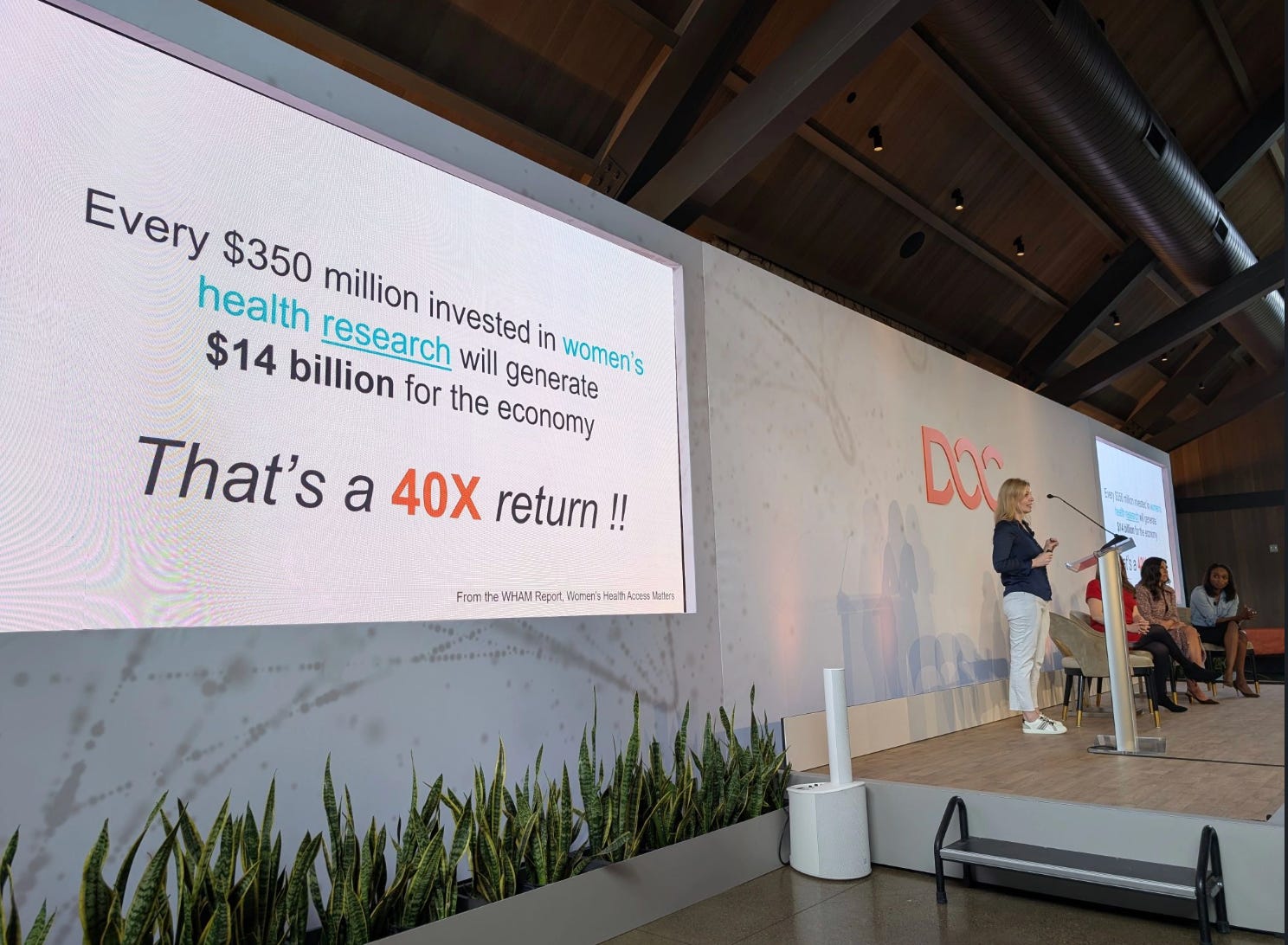
I will also leave you with this powerful slide that one of our advisors at In Search Of - Jennifer Garrison, PhD - presented at DOC - a 40x return on investment in female research!
One Last Thing
I’m building a curated community at the intersection of health, science, and culture: doctors, scientists, founders, investors, creators. If that sounds like you (or someone that you know), fill out this quick form (2–3 minutes). It helps me figure out how to best include you in future projects: events, collaborations, thought leadership, the works.
If you got something out of this, send it to a friend who’s either obsessed with longevity or pretending they’re not thinking about it yet. (We’re all thinking about it.)
And if someone shared this with you - WELCOME. Subscribe below to join the conversation.