


I learned about the Longevity Sports Lab through Eric Verdin at a private dinner in San Francisco. We were seated next to each other and naturally I had to ask where one of the most respected longevity scientists does HIS health. He said Warsaw. I’m from Warsaw, which made the coincidence feel too big to ignore, so I called Joanna Bensz and went.
Here is what the Longevity Sports Lab is: A spinout from a larger Longevity Center Joanna built over many years. The main operation runs full longevity workups. Biomarkers, imaging, protocol design. The Sports Lab is the extraction: a single fitness floor built to answer one question.
How do you deliver exactly the result someone needs - metabolic shift, endurance gain, body recomposition, longevity load - in the shortest possible time, with the highest precision, and the highest engagement?
The answer matters. It exposes what every longevity clinic misses. We have all the data. We know what works. Adherence is the bottleneck, not information.
Here is what happens at longevity clinics: Years watching clinics across three models: pure clinical, pure app, hybrid. The pattern holds. Three-hour assessment. Full biomarker panel. Protocol designed. Protocol not followed. The data is right. The compliance fails.
Your brain does not care about your VO2 max in six months. Your brain cares about how you look in the mirror next week. Longevity clinics operate on the premise that rational creatures comply with programs because the data supports them. This reads as false. Humans comply because something shifts their energy, appearance, or status. The entire category has been built on the premise that data is the driver. It is not.
The operators that figured this out - Equinox, Peloton before the collapse, elite personal training boutiques - operate in culture, not longevity. The workout is not about the adaptation; it is about the belonging and status. You go to a $250-a-month cycling studio not because you believe it will improve your cardiovascular health, but because you want to be the kind of person who shows up at 6 a.m. with a community. The health is the effect, not the cause.
Sports Lab inverts the clinic model. It is a fitness operation run by someone with deep longevity knowledge. The result is that “vanity” and longevity are no longer separate entries in ones health journey. They are the same mechanism and that mechanism makes people stick.
Here were some machines I found particularly interesting! I came from Equinox, where I watched fitness equipment evolve for years. These machines are genuinely novel
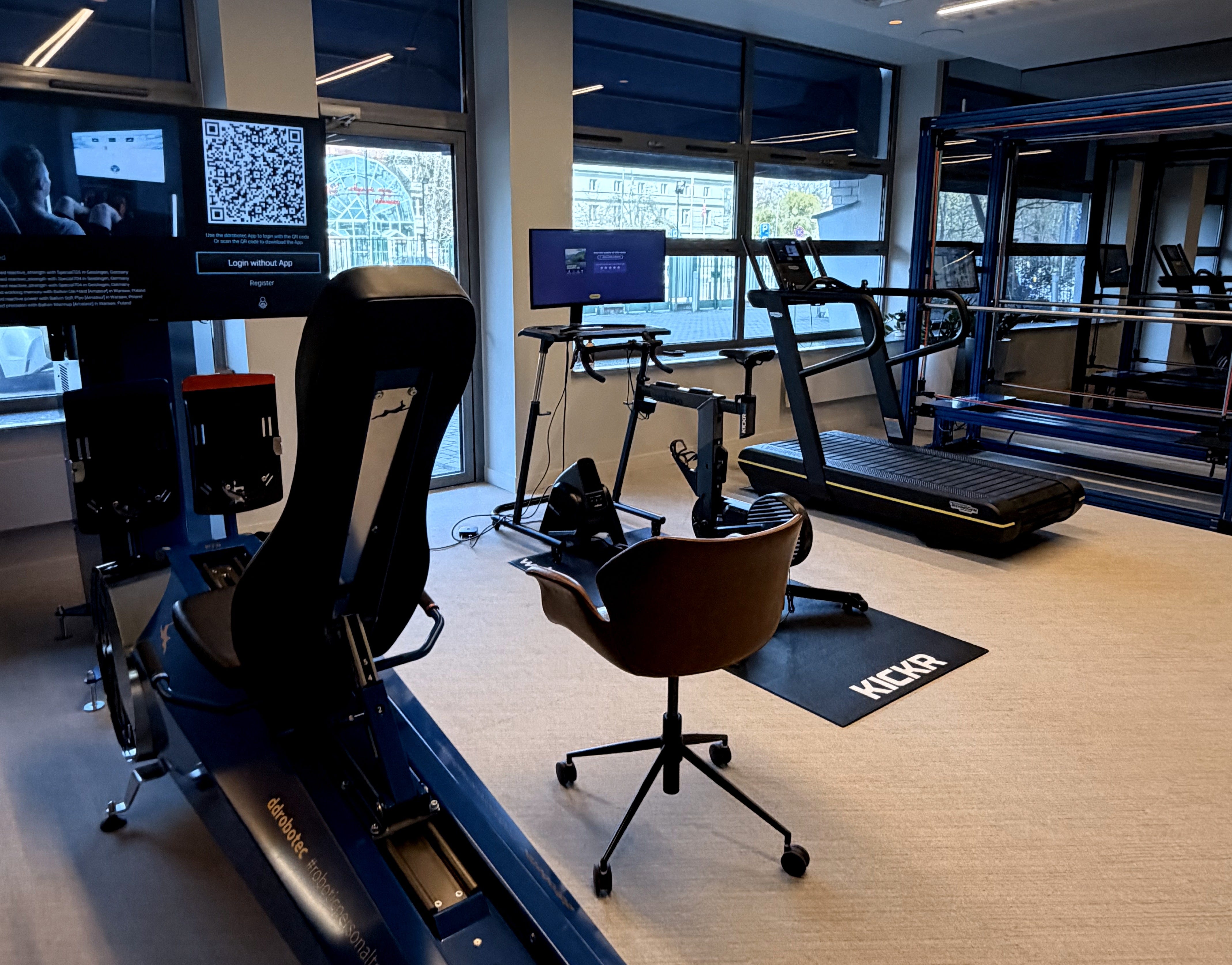
The first merges arcade and resistance - or to say differently it simultanously trains your brain and your muscles. Sit facing a screen showing a car. Follow it with your legs. The machine adjusts resistance unpredictably. Your brain tracks the car. Your legs track the load. You cannot zone out. You cannot run on autopilot. Twenty-five minutes delivers exhaustion from focus, not from sweating. Activities demanding simultaneous attention to multiple systems protect longevity better than single-task cardio. Running while podcasting, hiking with friends, playing tennis all outperform steady cardio. Most fitness equipment minimizes attention. This machine demands it. The workout gets harder because the brain gets harder.
Another machine is extremity coordination. Move wrists, arms, legs in a pattern while continuously trying to find balance. The machine resists unevenly. If one side is stronger, you feel it immediately. Most people have asymmetry without knowing it. The machine makes it obvious. The injury prevention thesis: most people train their dominant side harder. Years of asymmetry creates compensation. Compensation creates injury. Train the weak side to match the strong side. Prevent the tendon issues, the joint stress, the cascading pain that drives people to peptides and stem cell procedures. The injury dies before it starts.
This is WAY harder than it looks!
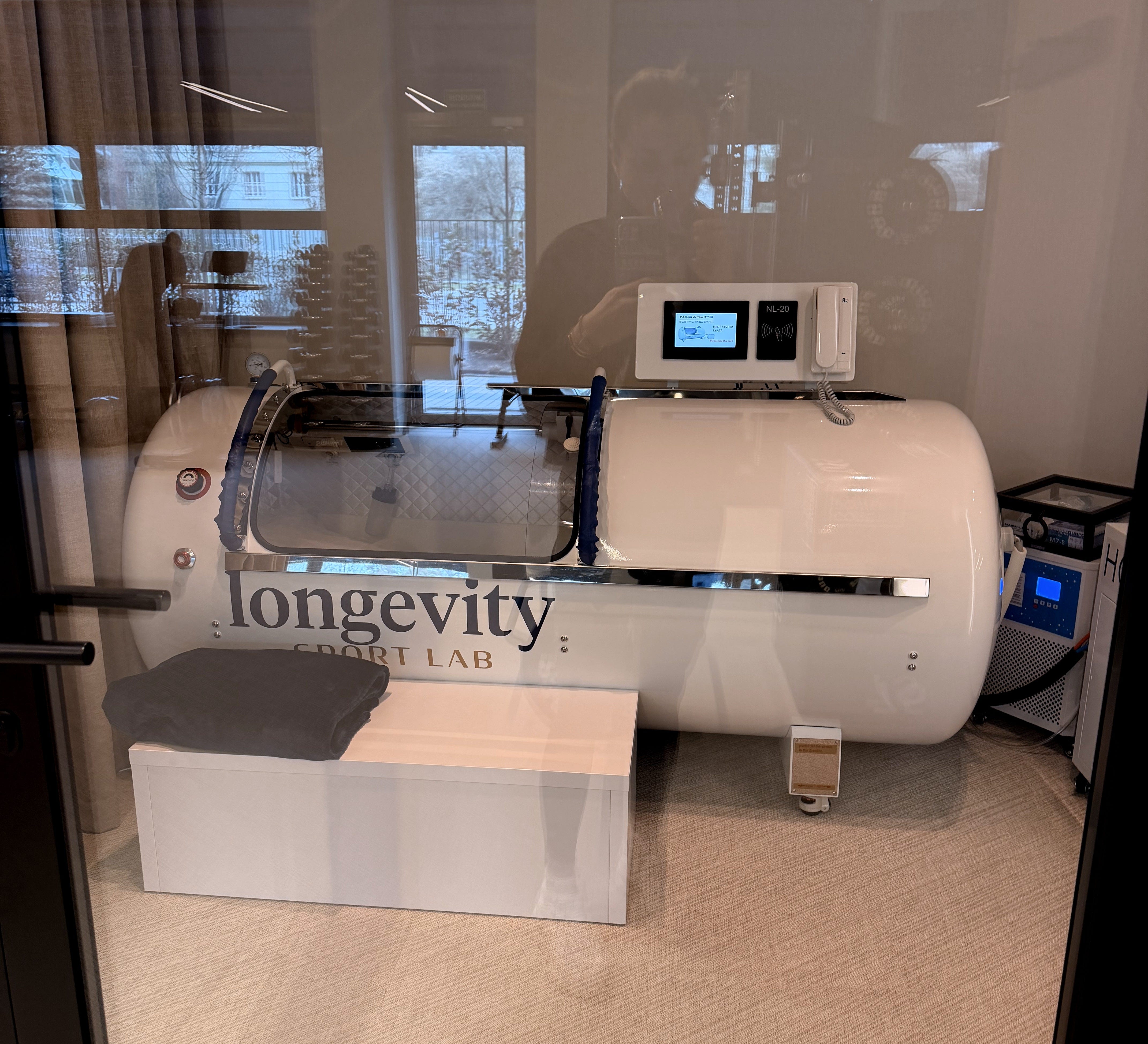
But mostly, the whole idea is run on protocols. The metabolic health protocol as example largely involves cryo for three minutes at minus-110 Celsius. Then straight to the bike for 30 minutes. Cold triggers a shift in metabolic substrate. Your body preferentially burns fat instead of carbs for hours post-session.
Most people fail the protocol because sitting in a cryo chamber is unpleasant. The lab integrates it into the flow. Walk to the chamber. Wait. Walk to the bike. Ride. The system carries you. No friction.
What separates this from Huberman’s frameworks: personalization to your actual data. Your data says whether you respond to cold or whether your metabolism is already fat-optimized. Adding cryo to someone already fat-adapted is waste. Swap it for something else. The protocol is not universal; it is yours.
The client base is CEO, athlete, luxury-brand operator. Optimizers, not desperate people. One hour a week, maximum ROI. This reshapes protocol design. Everything time-compressed. Everything data-backed. Nothing arbitrary.
Here is how the lab operates: Small by design. Capacity limits: five to six people at the same time, maximum. Book a time slot. No standing around watching. No classes designed for someone else’s intensity. Everything is yours.
European longevity operators are running a different game. Less obsessed with scientific rigor, more interested in whether people actually show up and stay. European models have always leaned into lifestyle. Some are now beginning to merge data without losing the lifestyle part.
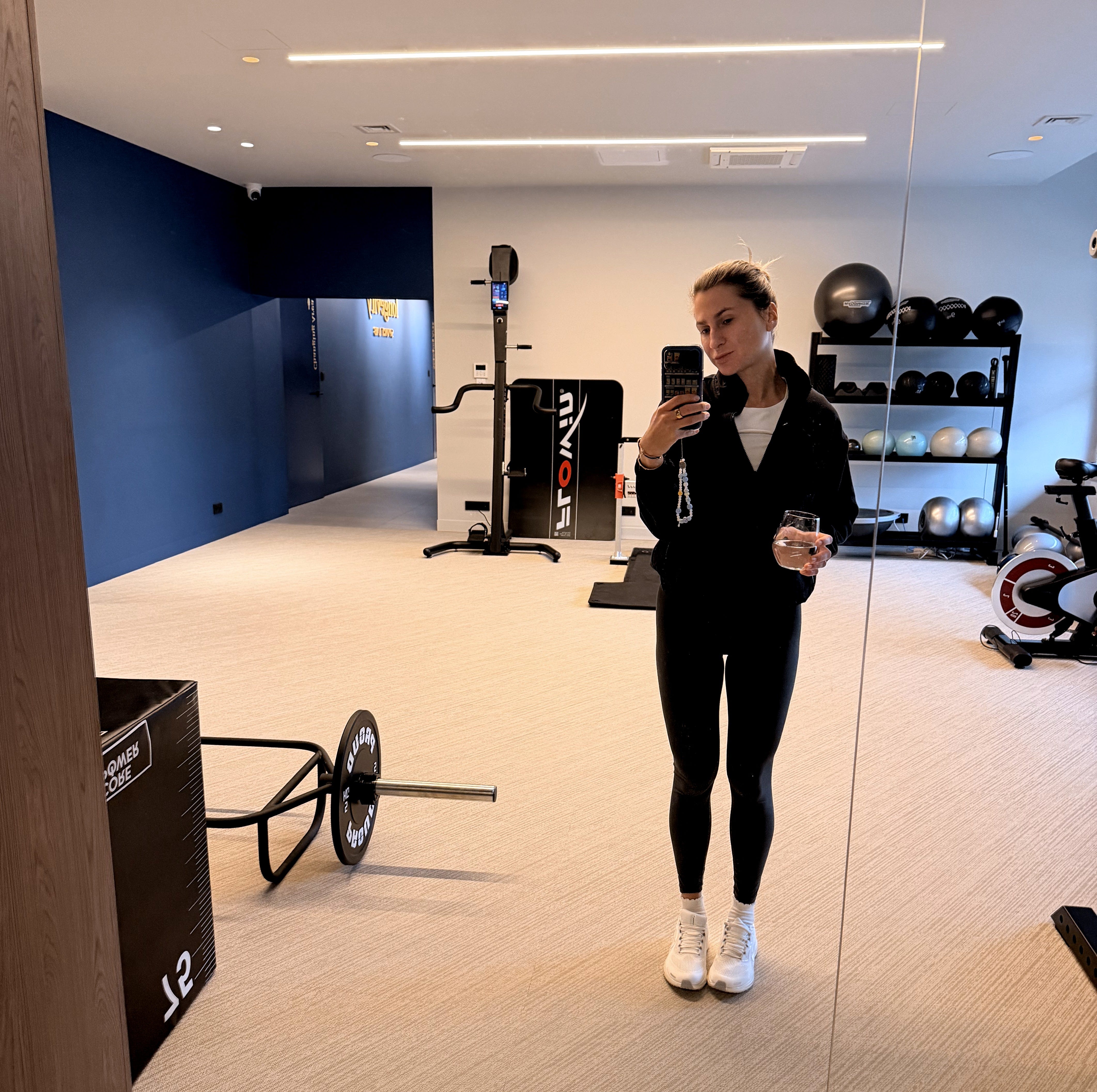
Here is what happened to me: I spent 25 minutes on the machines. Did not sweat heavily. Was not wiped in the traditional sense. Wiped from precision. Effort compressed into an exact window. Every second counts. No time to coast. No moment to phone it in.
This is what the optimization obsessive actually wants. Not more time. Less time, higher density. The Equinox protocol I helped build was about that. One hour absolutely worth your hour, because the cost of an hour at the top of a CEO’s day is enormous.
If this gave you something to think about, pass it on. Restack it for someone who’d argue with you, reply and tell me where you land, or subscribe if you’re new here. I read everything.
In Search Of is where I chase the questions the wellness industry is too sure about.
Appendix: Supporting research
On multi-system training and cognitive engagement in longevity:
Erickson et al. (2011). Physical activity predicts gray matter volume in late adulthood. Neurology. The study showing coordination-based exercise has outsized cognitive benefits compared to single-task cardio.
Srikanthan & Karlamangla (2014). Muscle mass index as a predictor of longevity gain. The Journal of Gerontology. Lean mass, especially where symmetrical, correlates with extended healthspan.
On asymmetry, compensation, and chronic injury in performance:
Ireland et al. (2017). Within season changes in strength and power predict subsequent match performance in professional rugby. Journal of Sports Sciences. Asymmetry detection is a leading injury predictor in elite athletes and translates to general population.
On cold exposure and metabolic substrate switching:
Yoneshiro et al. (2013). Whole-body MRI analysis of the distribution of brown adipose tissue. The Journal of Clinical Investigation. Acute cold exposure (3 minutes sub-threshold) triggers FAT oxidation preferentially in the window immediately post-exposure, a finding replicated across multiple studies.
Carey et al. (2013). Intracellular calcium signaling and brown adipose tissue metabolism. PNAS. The mechanism explaining why cold + subsequent exercise = preferential lipid oxidation.
On nervous system engagement and exercise adherence:
Ekkekakis (2009). Illuminating the black box: investigating prefrontal cortical hemodynamics during exercise with near-infrared spectroscopy. Journal of Sport and Exercise Psychology. Studies showing dual-task exercise (cognitive + physical) creates stronger neural reward signals than single-task cardio, explaining motivation differences.
On micro-dosing and protocol personalization:
Collins (2018). The effect of acute exercise on biomarkers in sedentary populations. A meta-analysis showing protocol response variability is high across individuals—one-size cold protocols fail ~30% of populations.
Brilliant post Julia. As someone whom has been running a longevity clinic “Wellgevity” in a hybrid model with partnerships for 12 years I’ve learnt why patients/clients stay and why they leave.
1. Service - personal and peronsalised
2. Feeling different - the prescription changes the way they feel/interact/are.. whether pharmaceutical or lifestyle.
3. Access to expertise and network and trusted network.
Love putting heads together with you.
See you soon .
DT x